
A girl named Hoshino finds herself back at Another Danchi, a community that’s past its prime. Her grandmother used to run a summer festival for the community, but it’s fallen away, especially with her coming down with dementia. However, the grandmother finds a spark of something familiar in old promotional material that Hoshino finds, and that gives her an idea: maybe she can make her grandmother better by reviving the summer festival. In taking steps, she revives the spirit of the festival Moro-Q, and perhaps together, they can revive Another Danchi’s traditions and revive a grandma’s memories.
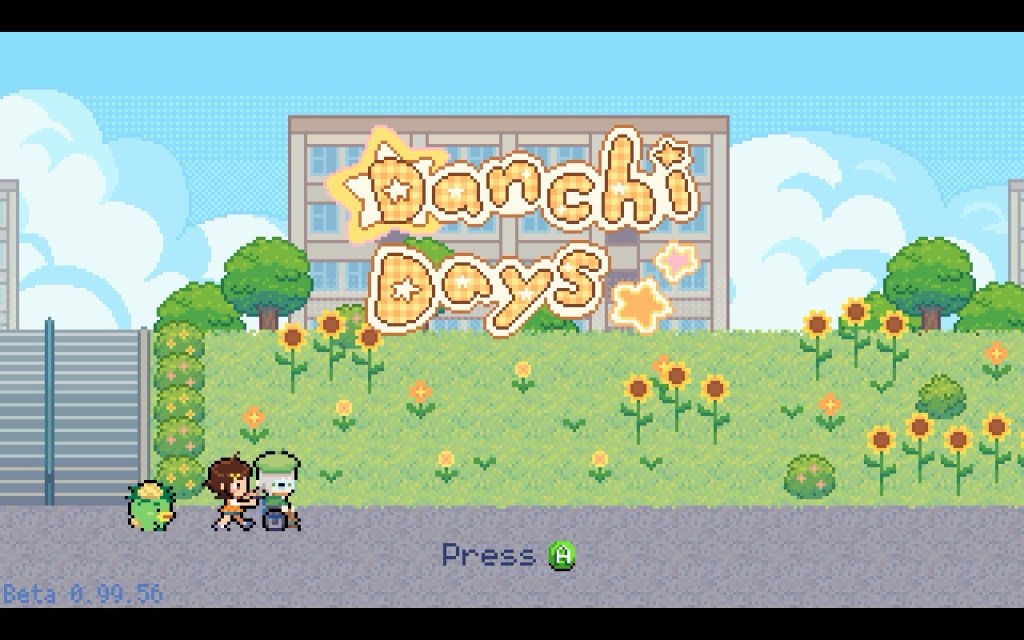
Danchi Days is a game developed by sandy powder, Melos Han-Tani, mogumu, and gingham games, and it’s published by Analgesic Productions. I actually played the game for Steam Next Fest last year and I really liked it. Combined with me being a big fan of stuff related to Analgesic Productions, I was excited to hop into this when I was given a code for it.
The structure of Danchi Days has our heroes going around Another Danchi to chat up members of the community to collect RSVPs to turn the summer festival from a little get together to a proper shindig. There’s a chapter structure that expands where Hoshino could go as she slowly builds up an infastructure for the festival, and she comes face to face with potential online haters of the festival. In the meantime, Hoshino finds herself at odds with her childhood friend Rio, who was once much like her but has become openly bitter. But he’s not the only member of the community that’s bitter.
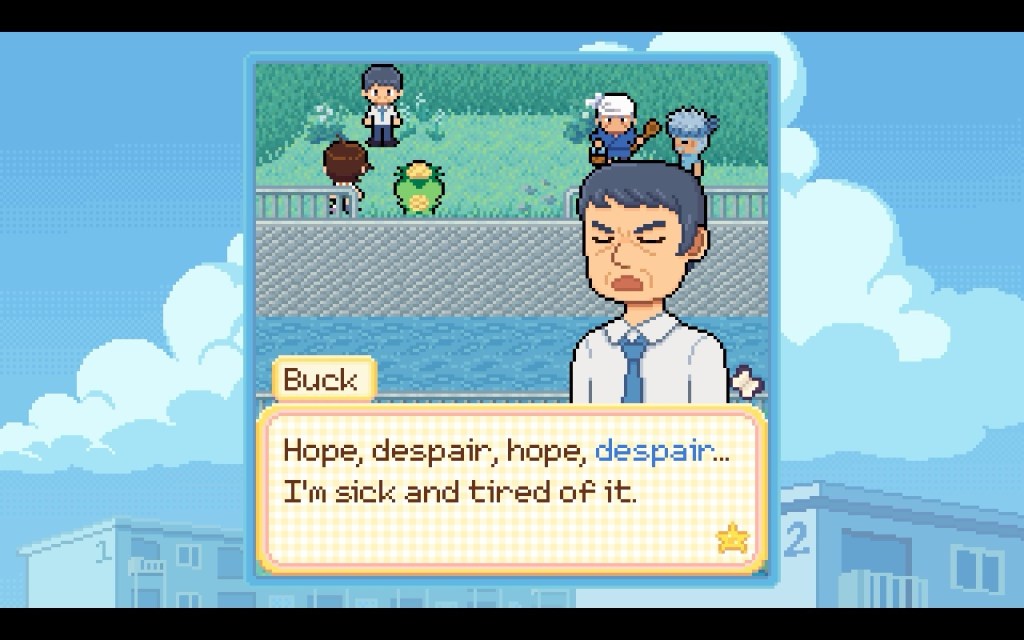
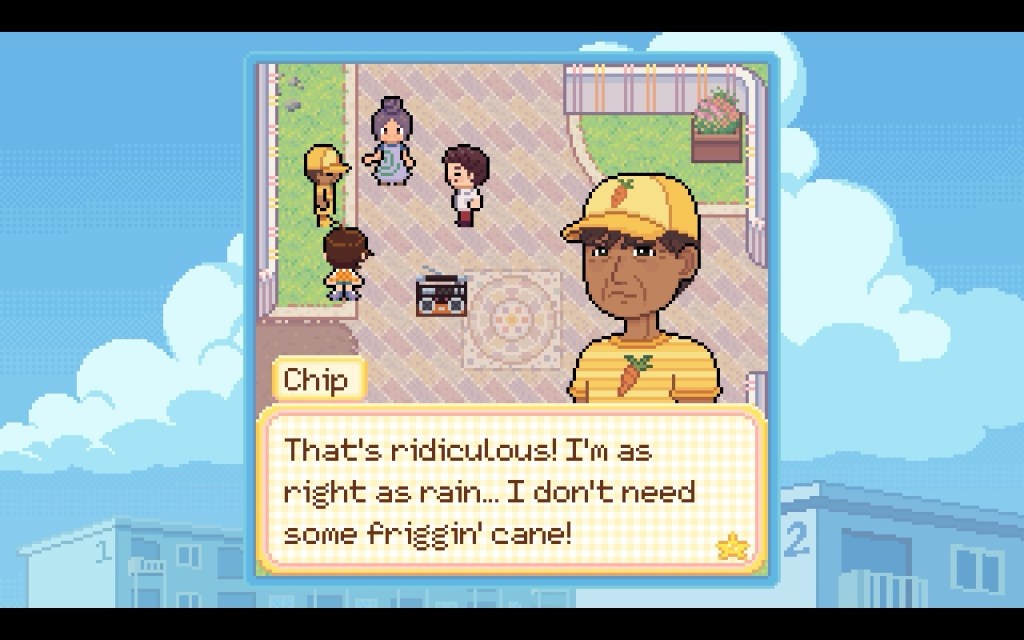
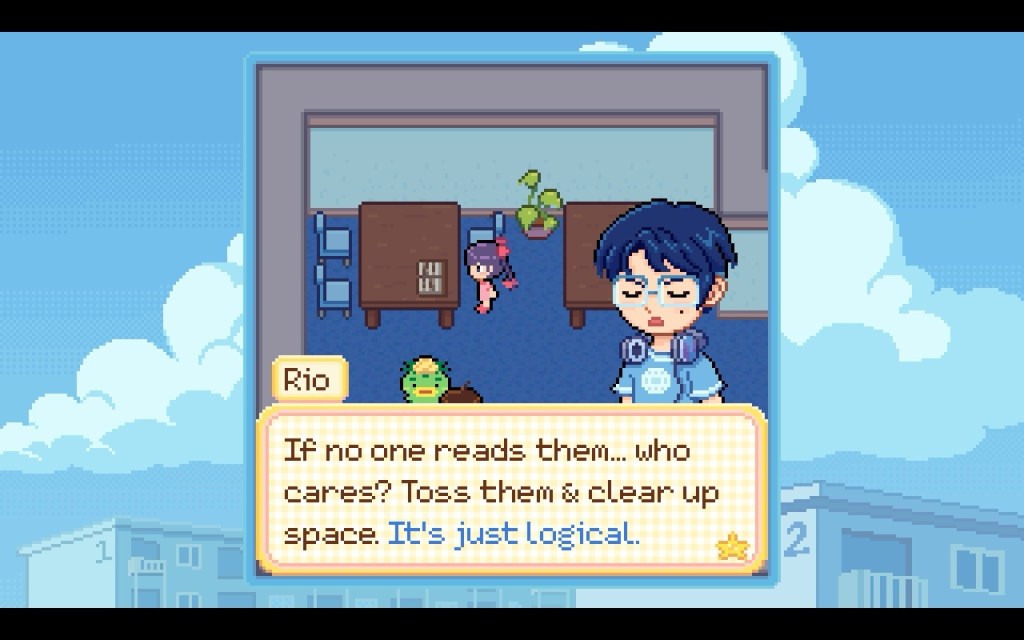
A general mood I read across Danchi Days, even with its cutesy goofiness, is detachment. There are a few friendly faces, sure, but they need to get that little push to get the encouragement to truly engage with the community again. The elderly members of the Another Danchi deals with the pains associated with aging, while a lot of the younger members of the community feel alienated and wants to leave. In particular, Rio had adopted the utilitarian mindset of his father when he got older, shrugging off tradition (a complimentary version of that) and emotion. Danchi Days feels like the story of dying small communities in the face of advancing technology – but perhaps the summer festival will be the jolt of energy that it needs.

And that’s not to say that Danchi Days is all about the need to fully follow tradition. Sometimes tradition is revitalized in a new direction, as Hoshino herself does with full encouragement by Moro-Q. Hoshino invites the aid of an immigrant family and has some real yuri moments with the daughter to provide a new signature food for the festival when the creator of the original food also has dementia and is unable to contribute. A boy with an interest in repairing old plushes takes his interest further by starting a store in Another Danchi’s dying shopping district, while himself giving a jaded old photographer a new lease on life by providing him a new job. Tradition isn’t necessarily bad, but sometimes it needs a burst of something new, no matter how small.
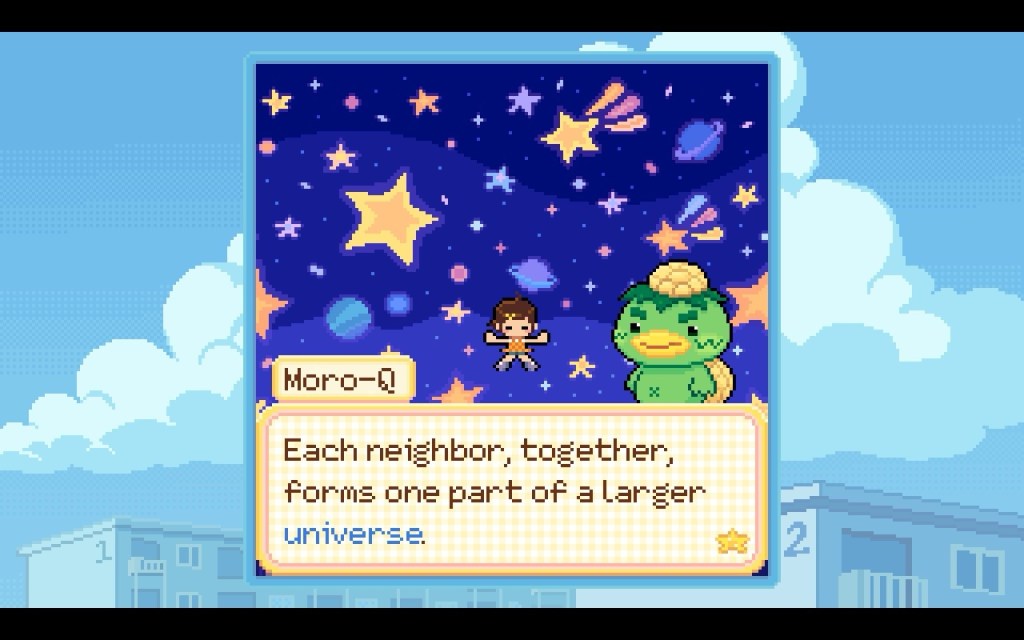
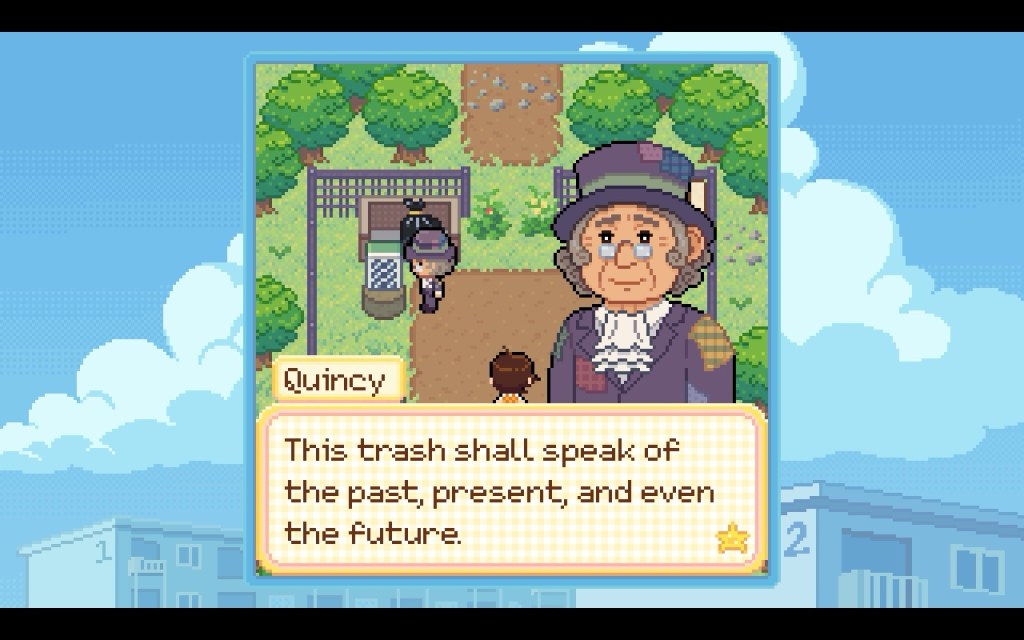
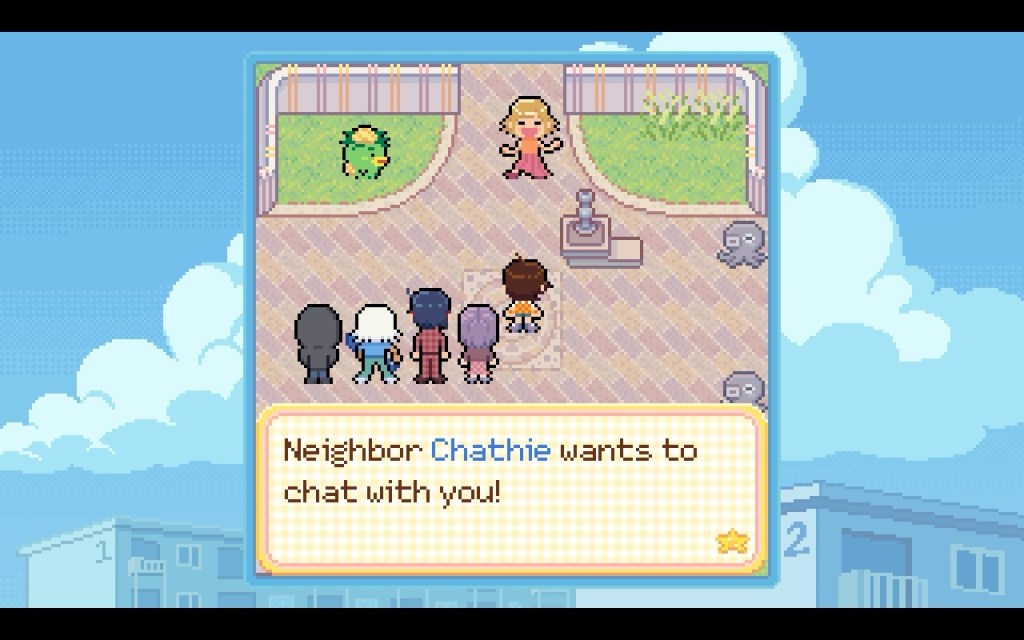
There’s a large variety of characters in Danchi Days to try to connect with, and they’re all weirdos. We have a young woman that loves maintaining the local water fountains. We have a man that insists on morning exercises, even at the expense of his aging body. We have a woman that likes telling lies if the lies indirectly help people. We have a comedian duo that suck at comedy so much that comfort can be found in the silence they leave behind. They provide simple vignettes of living at the danchi, while characters that get involved in the story like that girl Hoshino is in yuri with provides something more substantial. Though, some of the more minor characters do interact if you check up with them, giving a proper feel of a community.
Some of the more one-note characters are actually interesting because you can read reasoning for their interests, like an old man with an obsession with sweeping stuff with a bamboo broom revealing it’s a way to center himself. When confronted with a man paranoid that Something will happen to him, the old man tries to share his interest in the belief that it’d also help him. While there are certainly a few bit characters that the game could have done more with, the overall collection of people is neat.
But you may wonder, how on Earth will you be getting people to RSVP? For some people, it’s a simple conversation. For others, you have to connect with them, and to do that, Hoshino needs to follow her grandma’s belief in feeling things out and finding a mundane common ground to truly connect with others. Hoshino needs to become the ultimate empath.
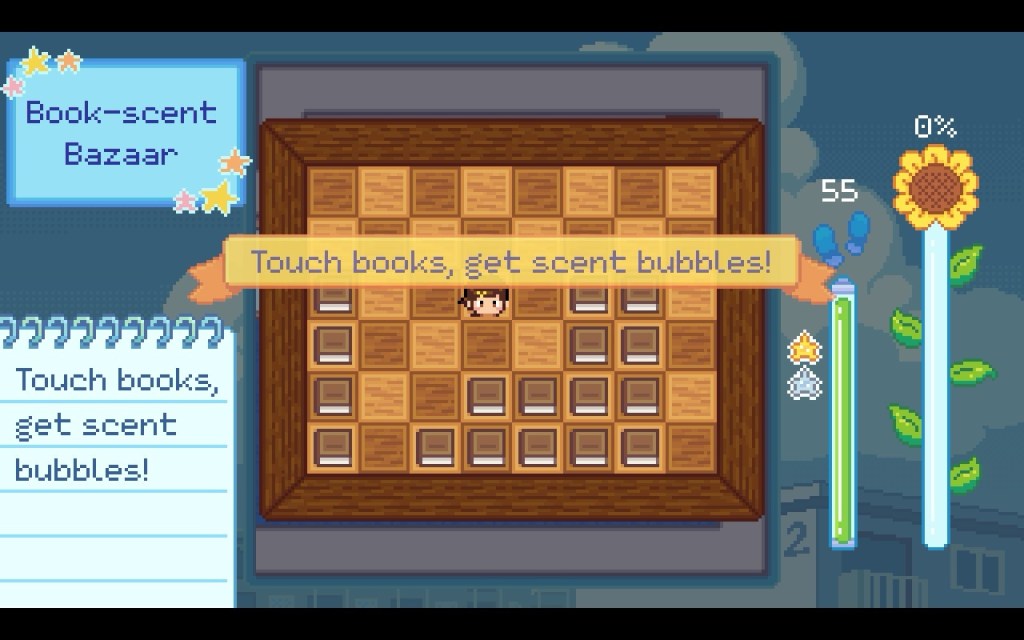

When you engage with a sensation spouting out stars, Hoshino can feel out the stars to engage with a Sense Minigame. The Sense Minigames are simple minigames themed after what Hoshino’s engaging with, and after clearing the minigame, she walks away with a new understanding of things. The goals are simple, though there is challenge in trying to accomplish the goals by taking as few steps as possible, and it feels like a puzzle game in how you go about doing so. Not using a lot of steps grants stars, and gathering them allows Hoshino passage through gates to engage with mysterious statues of Moro-Q that enables her to empath her way into Moro-Q’s presumable past to see her grandmother’s efforts with him to organize summer festivals – which also showcases its gradual decline.
While that’s one goal to do and there’s challenge in trying to find everyone in town to RSVP with, you can really take your time with things. True to the vibes Hoshino’s chasing, Danchi Day is a cozy game. You don’t have to chase after the Moro-Q statues and you can take your time with everything. With relaxed music and a cutesy style, it’s a very chill – if sometimes depressing – time.
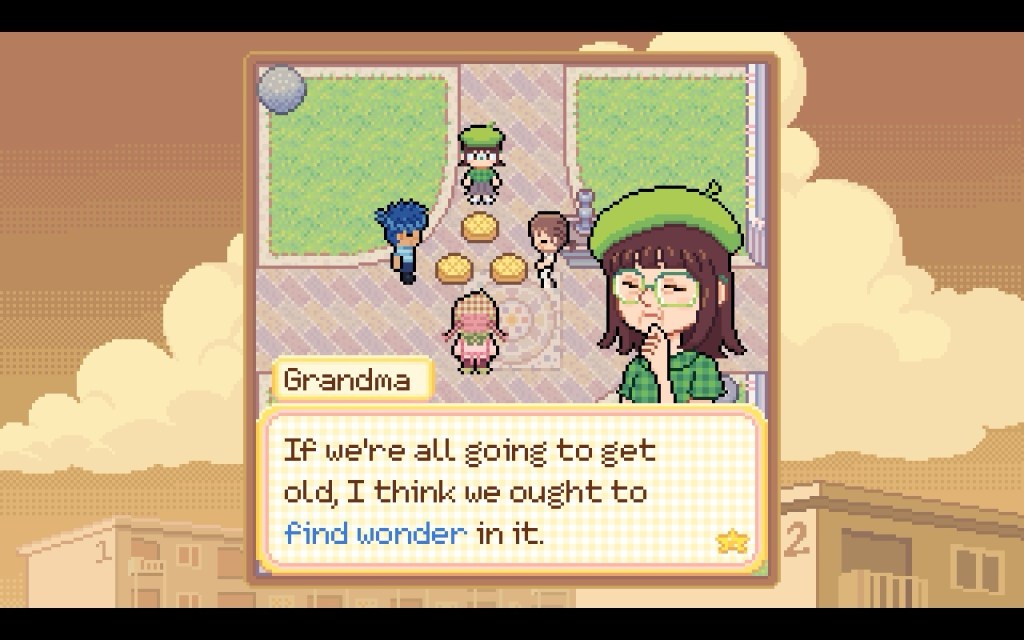
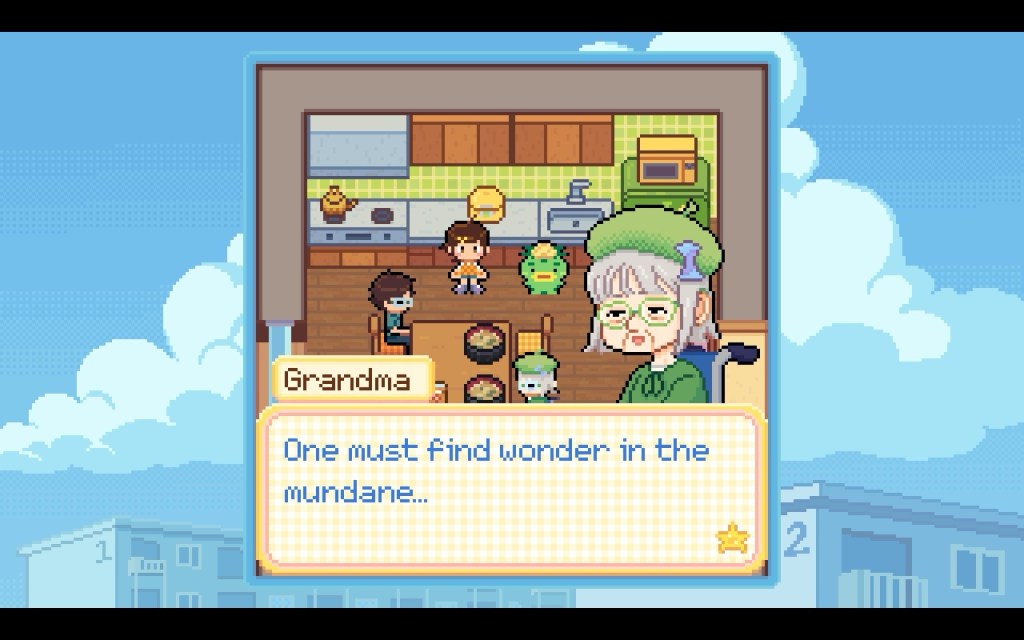
Danchi Day’s status as a cozy game is important to the game’s central thesis: you can find joy in the minor things in life. Hoshino’s grandmother instilled in her the belief that small joys can be found anywhere if you feel it out. The taste of a nice soup. The joy of dancing. The smell of books. The act of finding a four-leaf clover. The relaxing stim of pressing a button. Finishing a sense minigame gives narration about Hoshino’s feelings in engaging with the act, presenting a relatable lens to the players while allowing her to perhaps relate with another person. It’s cozy and comforting, and for these acts to be represented through simple minigames, you can find a simple joy in these acts even if you don’t relate to the feeling Hoshino finds in engaging with these acts.
It’s particularly meaningful considering the disability of Hoshino’s grandmother. As a woman with dementia, she’s forgotten how to do plenty of things. She ran the summer festivals for years, but beyond the growing lack of interest in the community, her disability keeps her from maintaining the tradition. However, despite her dementia, she is still a cheerful person. She still finds joy in the small things, and in reviving the summer festival, Hoshino hopes that the joys of the festival “fixes” her.
What’s interesting though is that the game doesn’t see that as a good thing. Hoshino’s goal is compared to someone outright wishing that her grandmother dies. It seems like an unfair comparison, but the thing is, both lean toward the ableist perspective that disabled people are “broken.” To wish that someone disabled just dies is cold utilitarianism, while wanting to “fix” someone is misguided optimism that still views that disabled person as lesser.
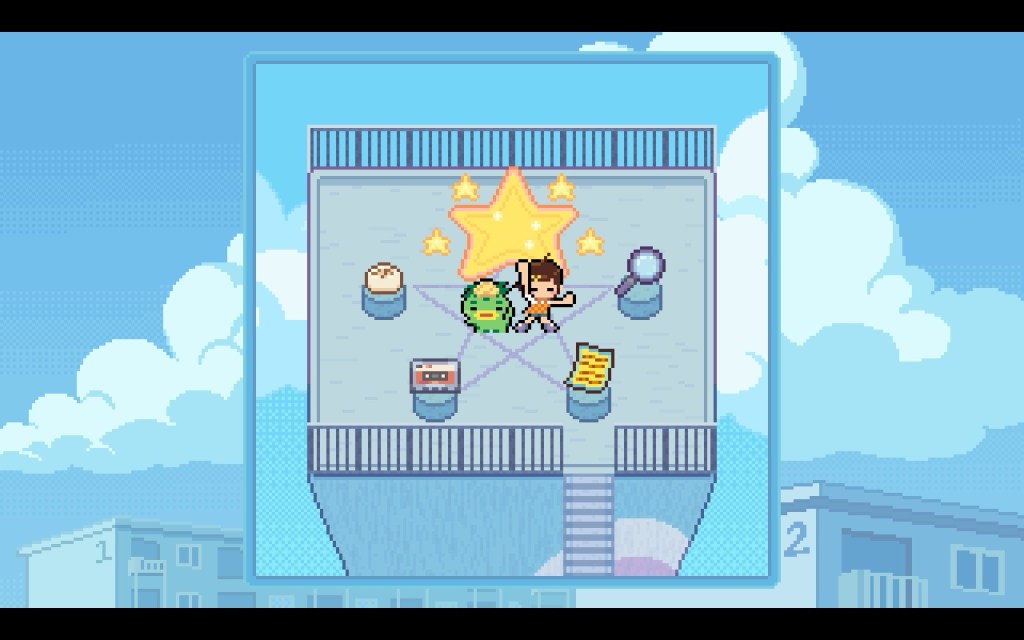
But disabled people are still people regardless of their disability. And in Danchi Days, Hoshino’s grandmother is still a person. She’s left a strong impact on the people around her and even if she can’t actively participate in things anymore, she still lives as a healthy member of society. And in advancing through the game, Hoshino soon realizes that she should respect her grandmother as who she is and value the time they spend together. No matter what happens in life, we just have to roll with the punches and find the mundane joys in life.
Danchi Days came at an important time for me. I’ve been open about having multiple sclerosis, a neurodegenerative disease like dementia, which has kept me from doing a lot of things. Recently, my mom suddenly died, and it’s something that upended my life. I’m moving to a new place with my sister since my mom was my primary caretaker. My sister’s put a lot on herself to conduct the move and I want to do more to help, but she insisted that I should just do what I can, no matter how mundane my help can be. After all, the small things in life matters.
Playing the game reminded me of the small things in life that I’ve come to treasure. While I don’t have the energy to straight up binge things, I have the free time to enjoy stuff I used to not have the time for (things that I can physically deal with, anyway). I’ve come to truly realize the power of air fryers as somebody scared of burning things down because I can’t stand for too long. I’ve been reading more to keep myself from looking at screens less often and I’m remembering the joys of reading I had back in high school. I’m grateful to have an audience for the things I do because it helps push me to do things when I lack the energy. I’m grateful for my friends and family even though my social batteries burn so easily now, and though I had some sour points with my mom, I’ll forever treasure the good moments I had with her.
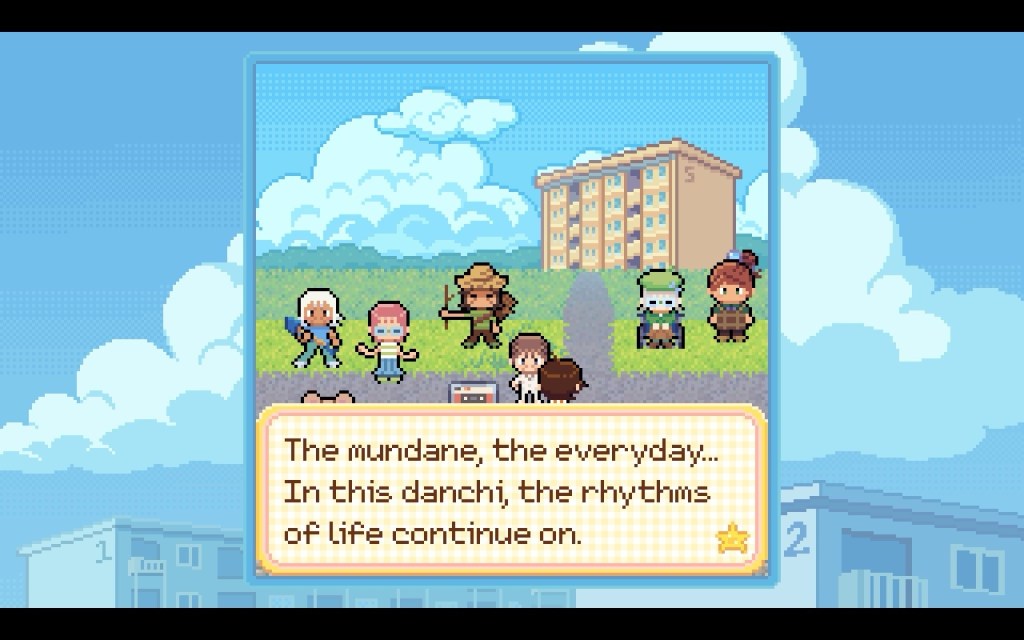
Honestly, it’s hard for me to come up with any criticisms of Danchi Days because it came at such a perfect time for me. Maybe Rio could have had more scenes to better develop his perspective with regards to stuff that happens toward the end of the game, but man, I really can’t bring myself to do any nitpicking at all. It’s a feel good game with themes and ideas that resonate so much with me. It’s the first cozy game that I clicked with in a long time, and as someone that’s been pretty open about disliking cozy games, please understand that that means a lot.
If you want something cozy – but not naively wishful – and something simple and sweet, Danchi Days is just perfect.

