
Hey everyone, welcome back to Indie Hell Zone, your favorite site on all sorts of indie music! Last week, we checked out Exploding Trees & Airplane Screams by Patterson Hood, a raw album that feels like a short story collection of American life in melodic form. Today, we’re stepping away from 2025 to step back into 2011 to look at an album that exudes a different sort of rawness, an album I personally resonate with: AJJ’s Knife Man.
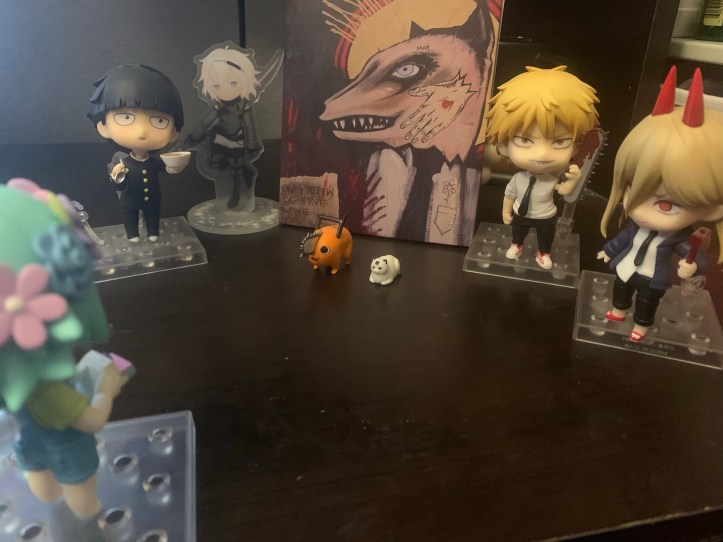
AJJ, then known as Andrew Jackson Jihad, originally started as a folk punk band under the leadership of Sean Bonette. While shades of folk punk could still be felt in Knife Man, it marks the point where the band drifts toward something more indie rock, which ends up being solidified with Christmas Island. However, the album undeniably holds a punk attitude. We can debate on the technicalities of what counts as punk, but come on, don’t be a fucking nerd. We don’t need a repeat of the 2021 Incident.
The main thesis that I read in Knife Man is that everyone suffers in their own way, and people just have to cope with it. The mood is immediately established by the short opener, “The Michael Jordan of Drunk Driving,” a song of a depressed man driving drunk until his “final game.” Is that the general mood of the album? Well, wait a bit. But, I can’t deny that suffering is a core part of Knife Man.
A general source of suffering throughout the album is people becoming homeless. “No One” laments the plights of “no ones,” and how “no ones” have no one to rely on, and how anyone could possibly become a “no one.” “No ones” are shoved in people pounds, a clear allusion to homeless shelters, when they’re not left sleeping on the ground, that is. “Zombie by the Cranberries by Andrew Jackson Jihad” (also known as “Zombie by the Cranberries by AJJ formerly known as Andrew Jackson Jihad”) is about helping the homeless – but how it could feel like empty gestures if the help isn’t more substantial beyond giving spare change. “People II 2: Still Peoplin’” follows up on this song immediately, talking of the suffering people can be in and alluding to how anyone can suddenly fall into financial ruin and become like those suffering – and that’s a huuuuuuuuuuuuuge bummeeeeeeeeeeeer.
Let me have a quick aside to talk about the “People” songs, born from AJJ’s 2007 album, People Who Can Eat People Are the Luckiest People in the World. The first “People” is about recognizing the humanity in people, while “People II: The Reckoning” is a more bitter song about how anyone has the capacity for evil (which incidentally was my most listened to Spotify song for 2024, shush); it feels like a cynical step back, but the first “People” is actually the last song on the album, as if the singer is reminding himself of his previously held belief and sticking by that despite the cynical outlook previously expressed.
“Gift of the Magi 2: Return of the Magi” feels like the equivalent of “The Reckoning,” an excited song about selling your soul just to help yourself, a lament about a selfish man that divorced his wife and how people are mean. “People II 2: Still Peoplin’” in turn acts as a counter to this song with how they are both presented as “sequels” in a way, expressing how anyone can be hurt no matter the privileges, no matter what they did, even if they’re terrible people like those of the Magi. People are people regardless of gender, even if they have the essence of a politician in them, and everyone’s soul has its own understanding of what it means to suffer, even if it’s sold.

Suffering continues outside the plight of homelessness though, even if it’s something more mundane, even if they have more than the homeless. That People song immediately segues into ”Sorry Bro,” where the singer clearly feels trapped by life and sings to someone that even though they have less than him and he’s rooting for them to get better, he laments that the person has the charm and freedom he wishes he had; outside of the singer and his subject, 15 people die in a traffic accident, but the show has to go on, because as “we’re the kids of America” expresses, that’s just normal America. Speaking of America, “American Tune” is a song of a guy bragging about his privilege as a straight white male in America – with his father being the same kind of man that wound up abandoning him, alluding to a vicious cycle. “Fucc the Devil” is about a guy that was lucky enough to quit his second job and support himself with only one, but he’s still clearly depressed, alluding to drinking problems and having a swinging mental state, wanting to disappear from the world. And, well, depression aside, you can still be a victim of tragedy beyond financial ruin, like in “Backpack”, where the singer has to deal with his partner being murdered.
Additionally, there’s a lot of self-loathing in the album. “Hate, Rain On Me” has its mood expressed in its title, and while there’s general bitterness thrown around at things like the sun itself, the singer hates himself more than anything, wanting to stay in bed and not even dress himself, letting the hate rain on him. “Sad Songs (Intermission)” has its singer, Steve, sing about how he wants to express his feelings through song, but is readily told by his mentor that his feelings don’t matter and to stop expressing his troubles because that won’t be making him money, leaving Steve to accept himself as a sad sack. The penultimate song, “Free Bird,” is a song about the singer flying free but alone, seeing himself as the Devil but seeing God in everyone else, setting himself apart from the rest of society with clear self-hatred.
What could we do about all that, you may wonder? Well, the way I read things: you just got to live with it, because even if you’re sad, everyone else may have it just as rough – if not worse. There are frequent looks on the brighter side, or sympathy toward others in spite of what the singer’s own situation could be, because we all have it bad, and we should all strive for that bright side or create one for others. Additionally, you have to acknowledge that everything has its ups and downs, as “Fucc the Devil” alludes to.

The ups and downs in life are expressed by the general tones of the songs shifting throughout the album, sometimes songs having more energetic instrumentals in contrast to their lyrical content. It’s apparent at the beginning, with the “Michael Jordan of Drunk Driving” moving into the bouncy “Gift of the Magi 2: Return of the Magi“ – and as angry as the song is, it undeniably has a fun mood. “Hate, Rain On Me” is a similarly energetic romp, and then it cools into “If You Have Love in Your Heart,” a short calmer tune that’s the most upfront positive song on the album… then the mood swings toward “No One.”
In “Distance,” the singer is clearly depressed about being separated from an ex-partner; it may possibly be a sister song to “Backpack,” as it comes after it and it’s not made clear what the separation entailed. Despite the depression, the singer continues living his life, and acknowledges that his pain won’t last forever, even if it feels that way. Besides the lyrical contents of both songs back-to-back, the thematic ups and downs are emphasized by the former song being slow and plodding and the latter being much faster and upbeat.
Steve of “Sad Songs”, while put off by his mentor, is debatably still in an okay place as a songwriter and says that he’s happy that the subject is happier than him. This look toward bright side for others is emphasized by the song being a jaunty folksy tune with a section of fun acapella humming. “Sorry Bro” is still fundamentally about finding sympathy with the less fortunate, expressed through energetic guitars that makes for an upbeat step away from the mood “Zombie” and “People II 2” established. “American Tune” is the darkest version of this, because while you can read the singer’s attitude as a product of a vicious cycle, he very much is continuing it happily. Good for him, I guess.
The ultimate coping is expressed through “Skate Park,” the singer going to skate on a terrible fucking day and stick, stick, sticks to his guns in spite of everything. In a way, it feels like a more positive version of being the “Michael Jordan of Drunk Driving.” It feels angry, but it’s the sort of anger that drives you to stand against problems, rather than the anger present in “Gift of the Magi 2.” Its instrumentals continue the energetic mood of “Sorry Bro,” but like “If You Have Love in Your Heart”, the mood swings down into the slower and morose “Free Bird.” However, even with the turn into downer territory, “Free Bird” has a glimmer of goodness, as despite the singer’s self hatred, he does not extend that hatred toward other people, seeing them as angelic.
But finally, it all ends with “Big Bird.” It starts with an acapella, the singer first expressing worries that contradict with each other, which fully captures a sense of general anxiety. Then, the instruments start kicking in with cinematic flair. The singer no longer worries about himself, but other people, a full acknowledgement that everyone can suffer in their own way. He worries about his family and how he affects them. He worries about society, referencing how it could fail individuals through mob mentality and indifference. Most importantly, he sings about a big red bird that lives under the city that won’t help him.

So an alternate thesis I read for the album is that Phoenix, Arizona sucks. There are a few references to Phoenix throughout the album. Most importantly, the big red bird that lives under the city that dies every night and comes back to life is clearly referring to phoenixes, so “Big Bird” could be read specifically about dealing with living in Phoenix, Arizona. I would definitely want a bullet big enough to fucking kill the sun mentioned in “Hate, Rain On Me” if I was living there, the Vegas sun is already painful enough. AJJ was born in Phoenix, Arizona, and Sean Bonnette actually worked in Phoenix’s social services for a time, directly referring to Knife Man being written around the same time he worked for the homeless.
Regardless, “Big Bird” is definitely how those with power may not help you. But the singer does look on the bright side: he bought a knife. No, more than that: against the swelling instruments, the downer mood turning into something hopeful, he is the knife. No… he’s the Knife Man.
I read the knife as him trying to fight against his problems, cutting through his anxieties. Going back to the very first song, the Michael Jordan of Drunk Driving’s laziness built pyramids and his solitude was a knife. On its own, it sounds depressing, but with “Big Bird” bringing back the knife imagery against more triumphant instrumentals, it could be read more positively. The knife is carving a space for yourself in the world, finding safety in spite of everything, something that could cut into those pyramids. Maybe the MJ of drunk driving’s final game isn’t death, but he finally stopped drunk driving – maybe he wasn’t self isolating, but he’s truly found a place for himself.
Regardless of how you interpret Knife Man, it ends on a quiet note. Birds start chirping as the instruments fade away. Drums briefly play and Bonnette quietly says “I’m walking on sunshine.” The song ends on a solid minute of peaceful noise. Birds happily chirp, people walk by, and a city in the distance carries on. The way I see it, it’s a reminder that no matter what happens in life, no matter what fucked up place you live in, life will continue on. You just have to live with it – but the “walking on sunshine” is one last reminder to find the bright side to it all.
Knife Man is an album that really resonates with me emotionally, and it was one I really bonded with in 2024 as the world and my own health got worse. But I’ve spent the past few months carving a space for myself, and I’m definitely in a better place than I was in January. Maybe things will dip back down, but I know that it will pick back up, because as “Distance” puts it, I know it won’t last forever.

Cut through all the bullshit. Carve a space for yourself. Become the Knife Man. And so, I proudly give Knife Man five big booms. Only a few deserve love, the godly re seeve the good lief.
 Indie Hell Zone
Hell yeah
LikeLiked by 1 person
HAHAHAH INCREDIBLE!!!! FIVE BIG BOOMS, GLAD TO SEE YOU EMBRACE THE KNIFE WITHIN YOU!!!!! I AM A KNIFE AND I APPROVE!!!!!!!!
LikeLike
Great text, much love ❤️
LikeLike