
I promised that I’d get one more part of my adventure with the House in Fata Morgana out before the end of the year, so let’s end the year with a kept promise.
The adventure to explore the memories of the manor continues. But before You proceed through the third door, a mirror catches Your attention…
There is a memory of a woman named Giselle coming to the mansion in an unknown time. She meets a man there named Michel. Michel warns her to stay away from the manor because of the witch’s curse.
The narration identifies the witch as someone named Morgana, but Michel identifies himself as the witch.
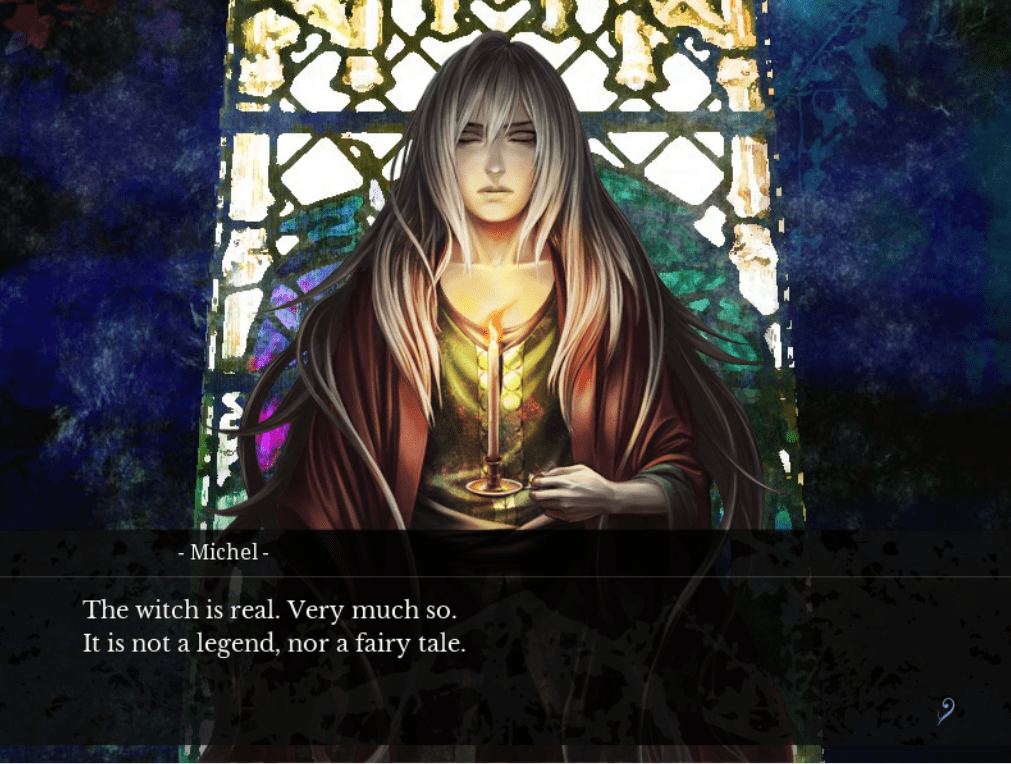
Then You are pulled away from the mirror, so allow me to take a quick aside to share a theory. Now, this theory is influenced by the lone fact that I knew about the game before coming in: Michel is the trans man I heard about, and Morgana is his dead name. Adding onto this, I think that You are Michel. Normally, chatty narration is the domain of the Maid, but the sequence after the Maid pulls You away from the mirror indicates that she had no idea what was going on. The narration is coming from You and the narration is You looking at who You were – but You’re still amnesiac. You only remember the witch’s old identity, but not that it’s changed and that You yourself are the witch. Maybe that’s why the Maid sees You as her master – You’re the witch that’s been upholding the manor the whole time.
Well, that’s my theory for now. Don’t tell me if I’m right or wrong, this is an answer I’ll see next year.
But moving on…
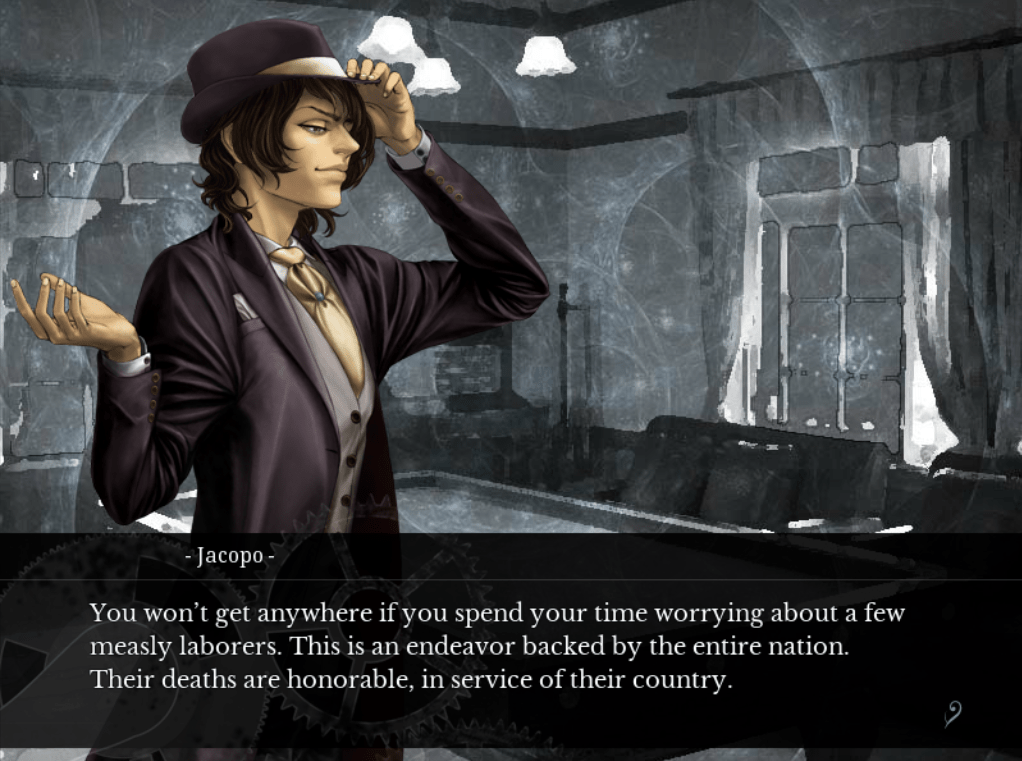
The year is 1869, and the game confirms that we’re in America. Photography has recently been invented, and the transcontinental railroads are under construction. Here we follow the tale of a man named Jacopo, an investor in the Central Pacific Railroad.
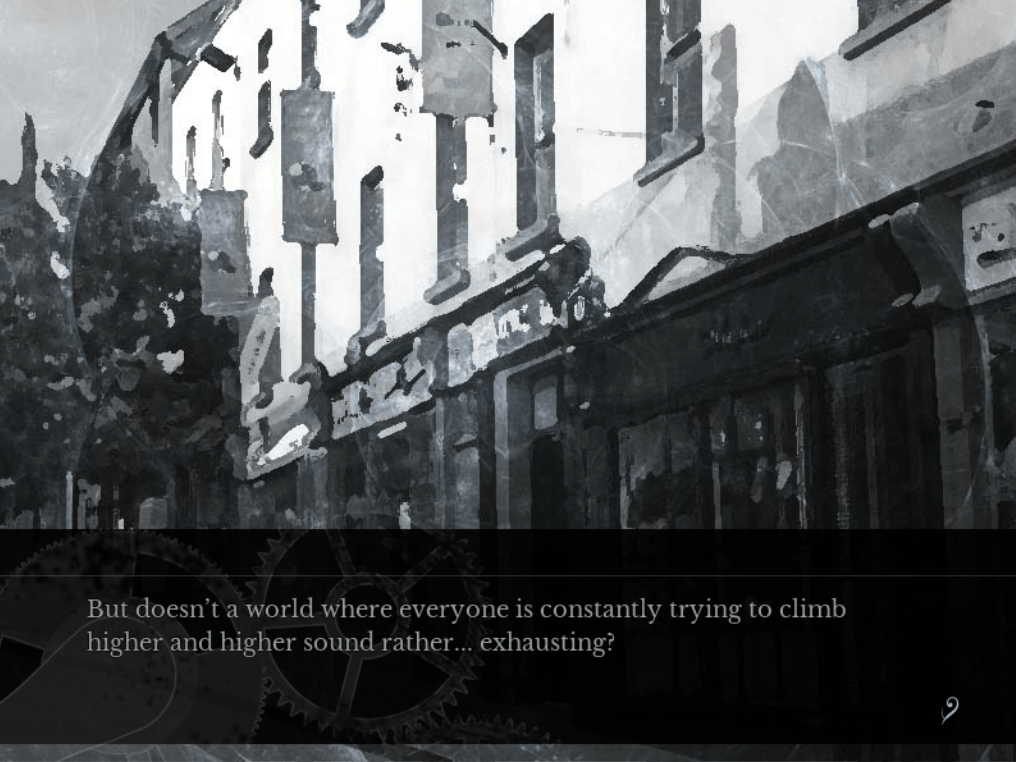
Jacopo is a guy that kinda sucks, but he has some concrete reasons for being the way he is, more concrete than Yukimasa, at least. He’s an immigrant from the Mediterranean and he’s next in line for what is totally not a crime family. Under the stewardship of his father, with the future of his family overseas hinging on his success, Jacopo is unhealthily driven to become a grindset guy. He felt like your average bluecheck grindset freak so I kinda didn’t respect him at first, but the more I learned about him like his mafia backstory and the true nature of his feelings, I ended this chapter kinda respecting him.
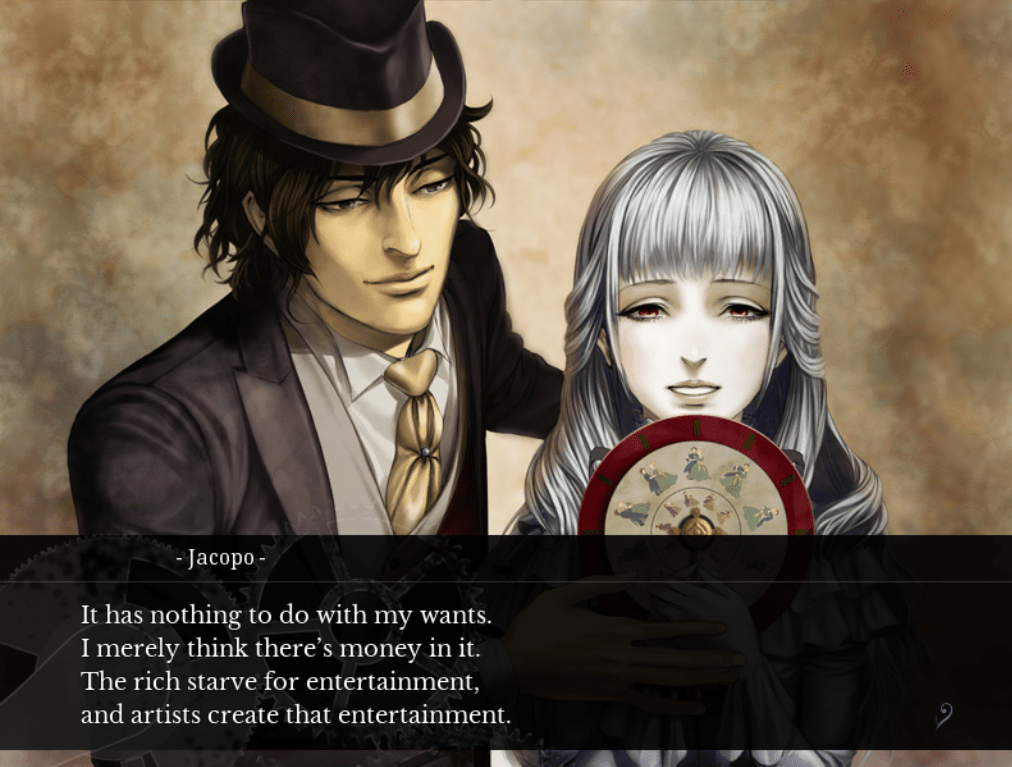
In trying to make a name for himself in America, though, he needed to get some clout to climb the ladder. And so, he marries this era’s version of the White-Haired Girl, a wealthy woman with power behind her family’s name. They start out a bit bumpy, but they have a nice day out together that both of them treasure: Jacopo commissioned the creation of a phenakistoscope. It was a simple gift, but it’s one that Jacopo felt would be unique when any other suitor would have given the White Haired Girl typical wealthy fineries, and the White-Haired Girl treasures it – even by the end.
Fast forward however, and things have fallen apart. Jacopo is emotionally abusive to his wife, forbidding her from seeing him when he’s meeting with other men for his business. The White-Haired Girl however holds onto the man he used to be, finding comfort in the manor’s rose garden, restored after the time of the Bestia.
She also has Maria.
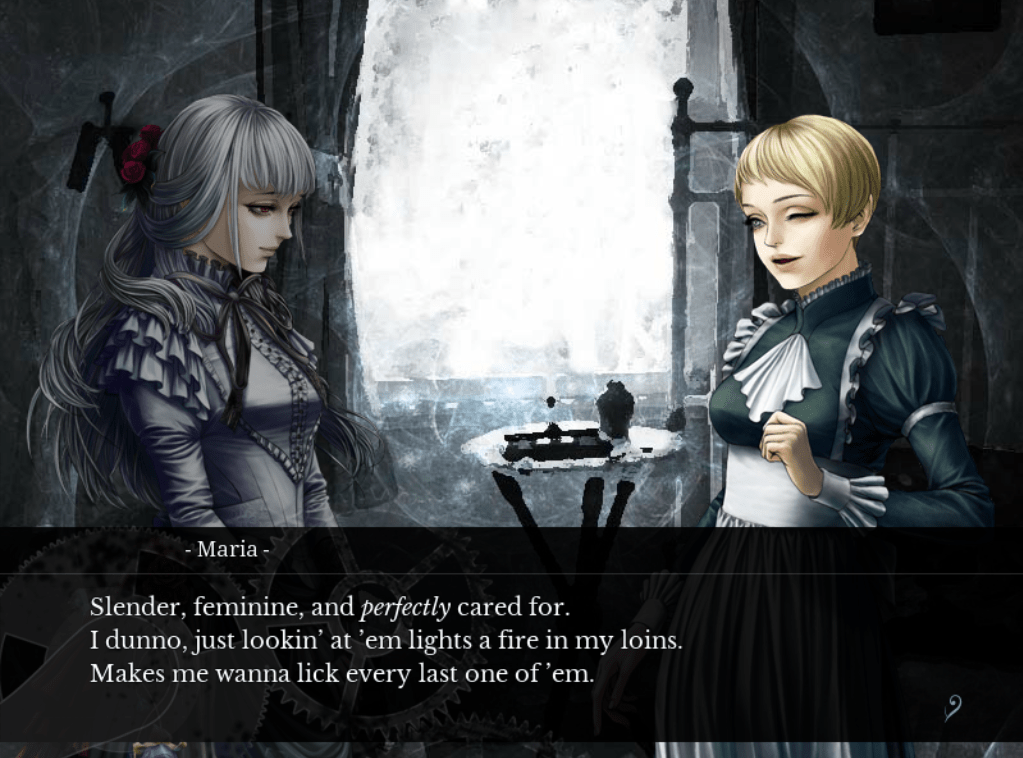
Maria is a maid in the manor that’s actually a personal friend of Jacopo. As kids, when Jacopo was more humble and friendly, the two had a great platonic relationship, in spite of their families being rivals. In the present, she still acts as a confidant to Jacopo, and comes to be one to the White-Haired Girl. And I’ll be real – they’re on some yuri shit. There’s no straight explanation for this.
The relationship becomes more frayed when Jacopo catches the White-Haired Girl and Maria returning from dancing together. Nah, he’s not mad about the yuri, but he is mad at the possibility that the Girl was sneaking around seeing other men. Jacopo orders the rose garden destroyed and has a shack built where it once was for the White-Haired Girl to sleep in to keep her from seeing other men, even within the main manor.
Despite her new circumstances, the White-Haired Girl hangs onto the memory of the day with the phenakistoscope. With Maria being the registered messenger between her and Jacopo – who refuses to see her face-to-face – the Girl gives Maria letters to deliver to him to communicate her feelings.
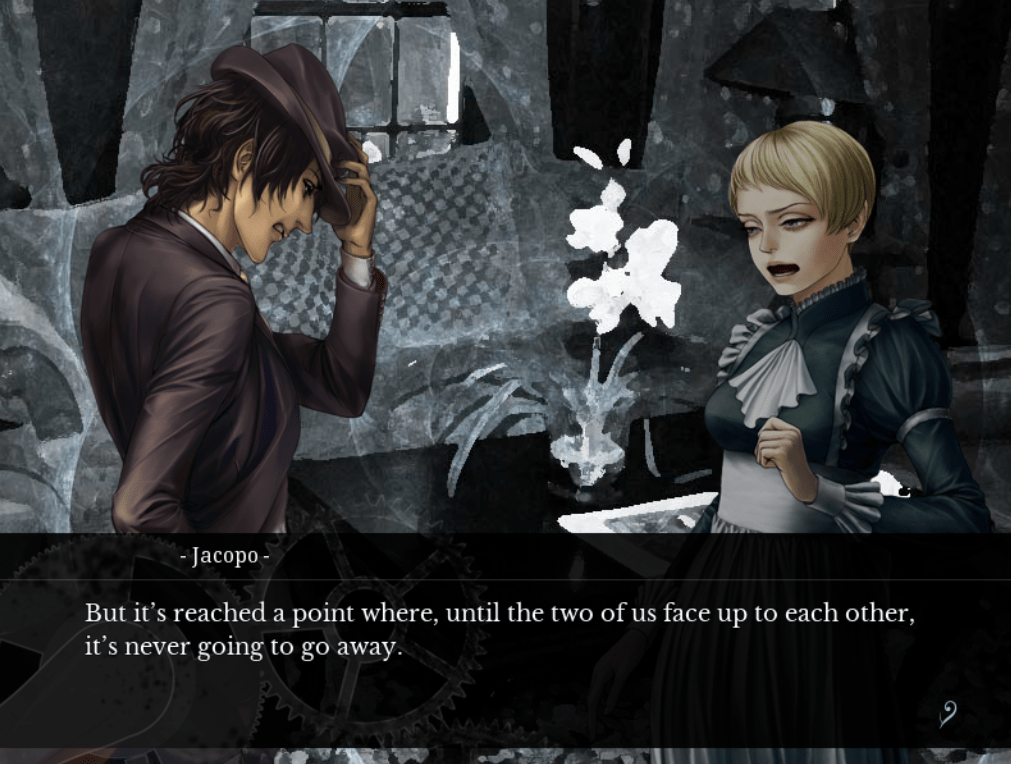
Now, this is absolutely going to be one of those things where nerds are just going to go “oh, why don’t the characters just communicate with each other. >:(” I hate seeing people complain about that conflict. That’s a normal real life conflict, a type of conflict that the people complaining about it are more likely to face than any other. Like shut up, I’m not gonna let some nerds that probably prefer ordering food from an app over seeing people face-to-face to buy cheaper take-out dictate how media should be. I know you just want your conflicts to be solving the disappearance of a cat from a small village in the Alps.
Though, I do side-eye Jacopo. If anyone had the power to actually communicate, it’d be him, and honestly, if you’re isolating your wife in a shack, you should at least talk to her a little bit.
But well, the thing is, he also trusts Maria to be the go-between, and he’s convinced he shouldn’t see the White-Haired Girl face-to-face. Despite everything, he does have some sincere feelings for the Girl and he hopes to use Maria as the bridge to reconcile.
But unfortunately for him, Maria is an opp.
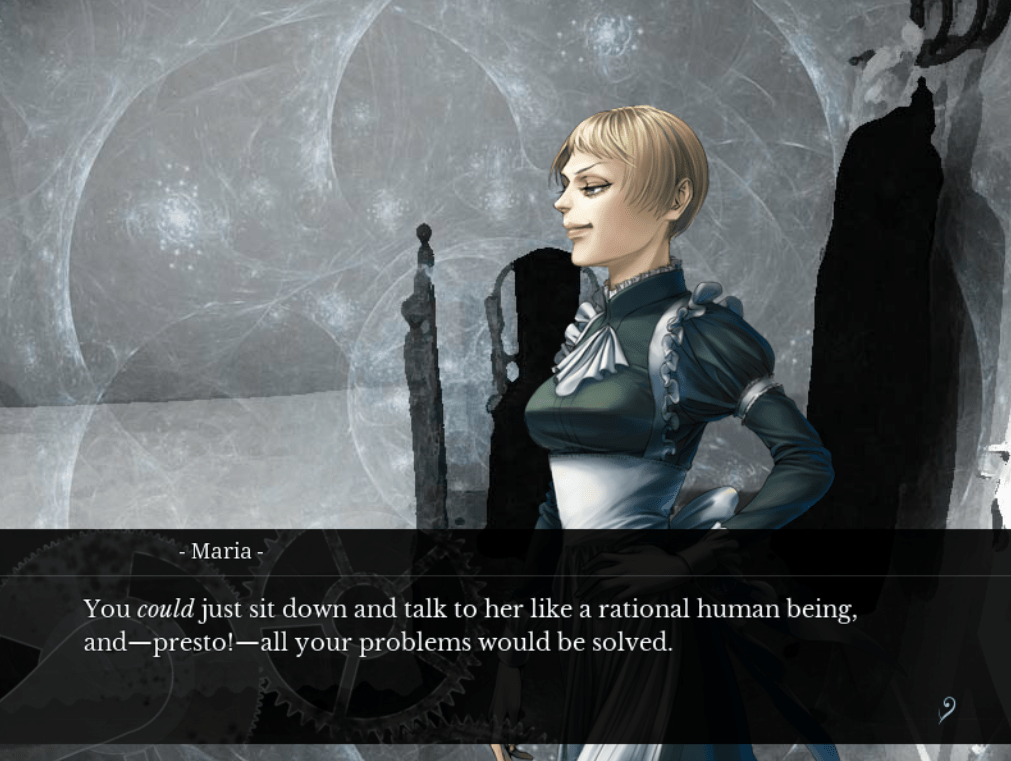
For a while, Maria had been feeding Jacopo lies that the White-Haired Girl has secretly been cheating on him. He refuses to let her come into meetings because he was convinced that she was seeing some of the men he had over, and he had the garden destroyed because he was convinced that she was secretly meeting up with men there. This all adds onto the pre-existing anxiety Jacopo’s had that the White-Haired Girl looks down on him for being an immigrant that wasn’t born into wealth. He could simply talk to the White-Haired Girl to clear everything up, yes, but he has so much faith and trust in his friend to be the bridge they need.
And so, Maria happily obliges. By lying to the White-Haired Girl what Jacopo’s been saying about her and modifying the love letters to make it look like the Girl’s been writing to other men. Despite her lies though, Jacopo hangs onto the White-Haired Girl in spite of the belief that she’s been cheating on him, and the White-Haired Girl still hopes to truly reconnect.
Love is the name of the game here, but love is nothing if you can’t communicate with each other. Well, Jacopo and the White-Haired Girl have a platonic (at least for Jacopo) love for Maria that they depend on, and there’s nothing wrong with platonic relationships, but you have to make sure that love is well-placed and unfortunately, they’re putting their trust in the biggest hater.

Speaking of that hater, at one point, Maria actually has to do her maid job for once. In the cellar, she finds old cryptic writing… that she’s pretty sure is her handwriting. She also finds a ruined painting of the White-Haired Girl – or at least a past variant of her.
Let’s take a step back. Back when the rose garden still existed, the White-Haired Girl and the Maid had a conversation in it. The conversation confirms that the Maid is the same maid now and forever, and the White-Haired Girl seems to be some reincarnation. Though, the Maid initially seems to think that the White-Haired Girl is immortal and seems confused that she does not remember what past variants experienced. At the very least, despite a White-Haired Girl always getting drawn to the manor, the Maid seems to have no control over that. That scene with Maria also suggests she’s some kind of reincarnation. Hmm…
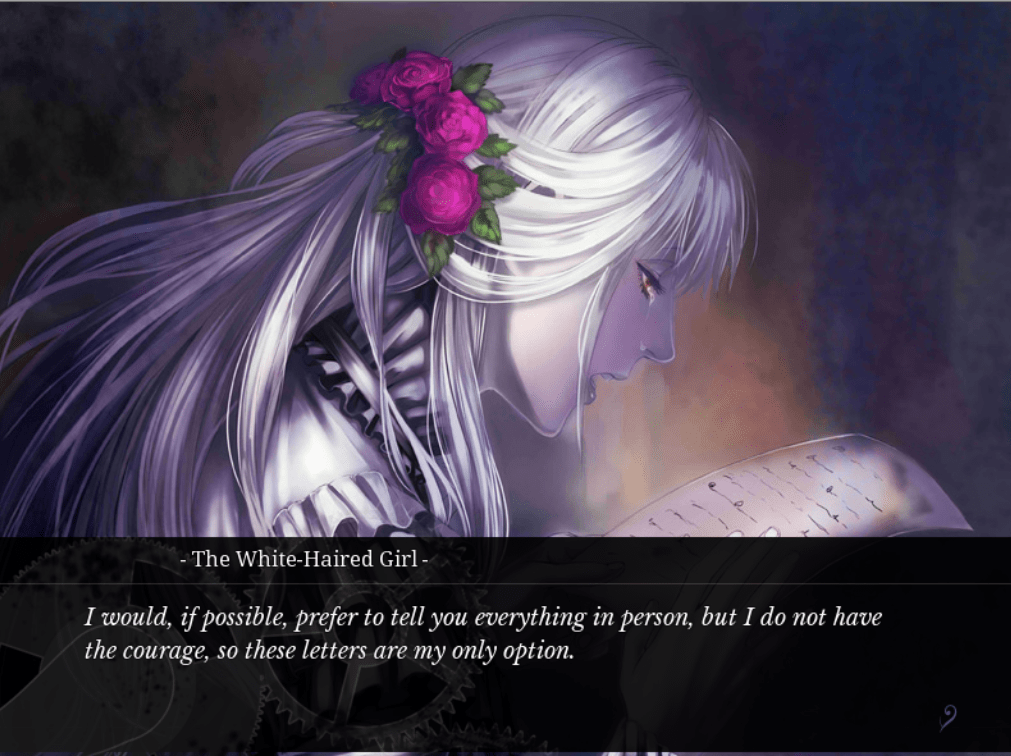
Well, the Central Pacific Railroad is finishing up. Jacopo resolves to muster up the courage to finally see the White-Haired Girl face-to-face again and properly talk things out on the day the railroad is completed so they can celebrate together. The White-Haired Girl, given the ruined portrait of her other self Maria and convinced Jacopo did it, decides to leave him on that very day. Well, things will work out if Jacopo talks to her first.
Unfortunately, Maria has one last trick. Historically, the Central Pacific Railroad finished November 8th, 1869, but in the Fata universe, a storm delays its completion for a few days. Jacopo tells Maria to tell the White-Haired Girl about the delay, and she of course doesn’t. On the fated day, Jacopo shows up to the shack and finally pours his heart out… but no one’s there. As cruel as it was to isolate the White-Haired Girl, she wasn’t locked away, and she had already left on the historical day.
Investigating the shack and realizing that the White-Haired Girl actually still loved him and that Maria’s been lying her ass off, Jacopo goes to confront Maria. Maria reveals that she’s actually hated Jacopo for years, because Jacopo’s family murdered her dad and grandfather; her family would have been the ruling crime family and while she wouldn’t have the same kind of position as Jacopo because of her gender, she would have been in a much better place if Jacopo’s family hadn’t usurped hers. And so, Maria resolved to destroy his life and kill him. Like, this motive makes sense, but I’ll be honest: I thought Maria was on some toxic yuri shit and she did all this in a long term plan to cuck Jacopo.
Jacopo is really disheartened by this, because he genuinely valued Maria as much as the White-Haired Girl. There was some conflict with how he approached both of them with regards to his patriarchal crime family. He had to convince his dad about bringing Maria with him to America despite her being from a rival family, and he had to compromise by just making her a maid – he sincerely wanted to get her a better position, but his family needed hers to stay subjugated under theirs. Keeping the White-Haired Girl isolated? A better alternative to his dad’s idea, which was to straight up kill any woman that disrespected him. While Jacopo follows his family’s image, he refuses to fully live up to it – but unfortunately for him, Maria is still spiteful about what his family did to hers.
Maria shoots him with a gun supplied by ammo he gave to her as a goodbye gift when she briefly separated from him. It’d be a fitting, ironic end for Jacopo… except Jacopo survives, and he immediately one-ups her with a single shot to the head that kills her. Like damn, guess he actually is credible at doing gangster shit.
Jacopo lives on, but is miserable. He killed his closest friend after learning that she secretly hated him, and he tries to find the White-Haired Girl, but much like with Mell, she’s out of sight. And so Jacopo dies of old age with the success his family demanded of him, but nobody to be with.
And that’s the third chapter of the House in Fata Morgana. This was a really fun chapter, and I like that we’re seeing bits of a broader narrative poking through everything. I like how the game keeps playing around with the concept of love and actually places a pretty strong focus on platonic love here. Shame that it didn’t work out, but hey, can’t win them all.
I think the tale of Jacopo’s interesting coming off of Yukimasa. Yukimasa was a guy that kinda sucks as the Bestia, sad when you see how he became that way, then it’s just, oh no, he really is just a terrible person. As I said, Jacopo reminded me of a bluecheck grindset guy and I wanted him destroyed when he goes on about wealth, but after all the flashbacks, I can understand why he’s like that and that if he truly was an awful person, he could easily be way, way worse.
Before I close out, I want to share an alternate theory to the one up top that I thought of while typing this up: the White-Haired Girl is Michel pre-transition. There were a few instances in the past few chapters where somebody says the Girl’s name, but it’s always censored. So I’ve been thinking – what if it’s censored because that’s actually Michel’s dead name? They got the shared hair color at least. Well, regardless, I insist that You are Michel.
And so we end 2024. I wrote a kinda reflection on that, check that out. Oh yeah, I also wrote a thing on Live A Live, maybe you’d like that too. I’m trying to find remote work success because I’m really not healthy enough for physical work these days, so maybe 2025 will be better for me.
Well, I hope you all have a Happy New Year. Fuck it, thank you, I love you all.
 Indie Hell Zone